Career Planning for Students: Why Starting Early Matters
How early career exploration helps students make informed academic decisions.
By INVIKTUS Career Guidance Team
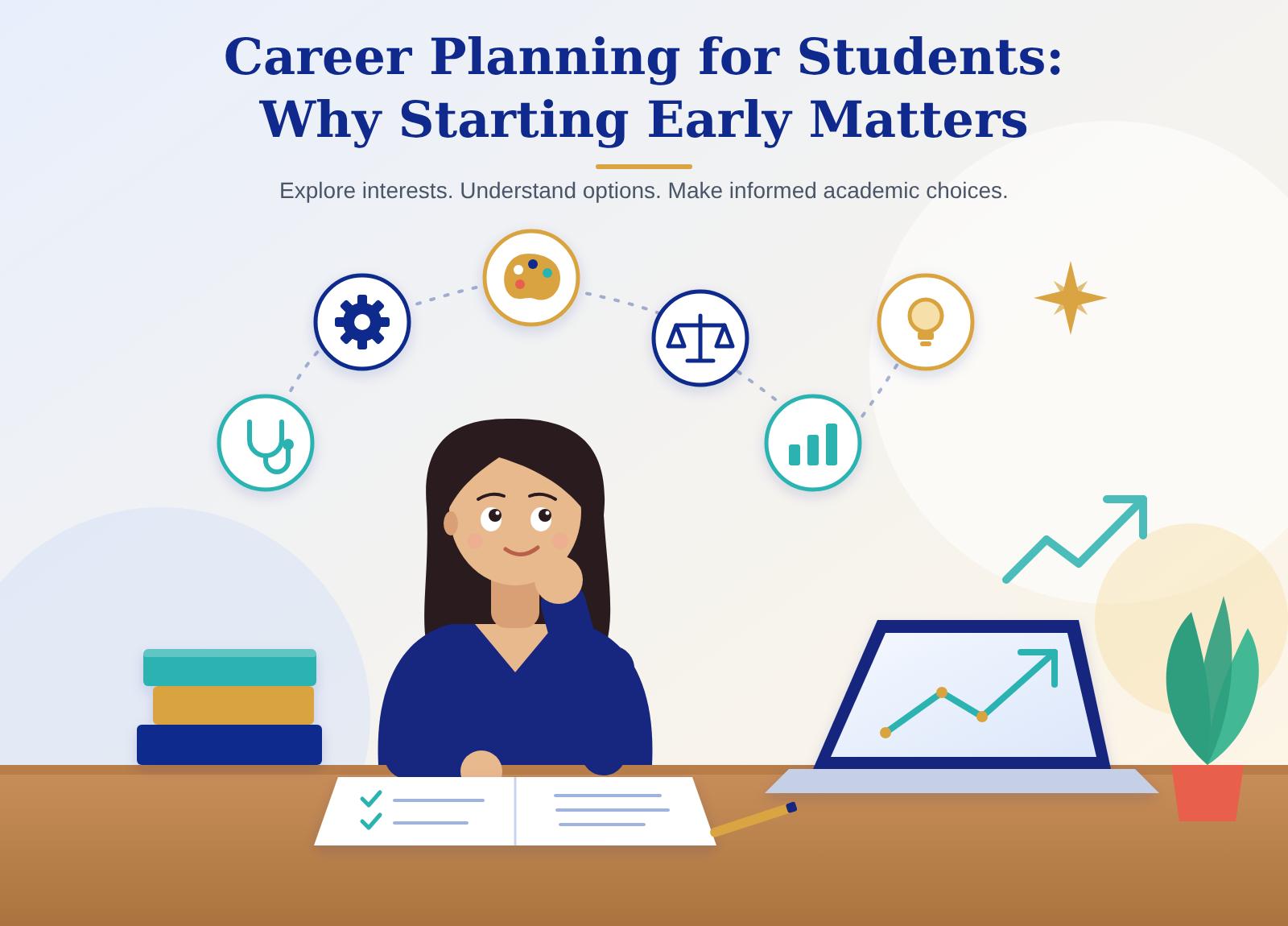
For many students, thinking about the future can feel exciting and overwhelming at the same time. There are countless careers to explore, subjects to choose and expectations to balance. Students may feel pressure to decide what they want to become before they have had a chance to understand their own interests and strengths.
That is why career planning for students should begin early—not to force them to choose one career for life, but to help them explore possibilities, ask better questions and make academic decisions with greater clarity. When students understand the connection between what they study and the opportunities they may pursue, their choices can become more purposeful.
What Is Career Planning?
Career planning is an ongoing process of understanding yourself, exploring different fields, learning about the education and skills each path may require, and setting practical goals. It can include conversations with teachers and counsellors, career assessments, researching courses, attending workshops, and trying activities that introduce students to real-world work.
It is not a one-time decision or a promise to follow a fixed path. Interests can change as students learn more about themselves and the world. A useful plan leaves room to review, adapt and discover new options.
5 Reasons to Start Career Planning Early
1. Understand interests, strengths and values
Students often know which subjects they enjoy, but may not yet know why they enjoy them or where those interests could lead. Exploring different careers can help them notice patterns: a student who enjoys solving problems may be drawn to technology, research or finance, while someone who likes supporting others may want to explore education, healthcare or community-focused work. These are starting points for exploration, not labels or limits.
2. Make more informed subject and course choices
Academic choices can affect which courses or entrance pathways are available later. Learning about the subjects, qualifications and skills associated with different fields helps students compare options before making decisions. Rather than choosing a stream only because friends chose it or because of outside pressure, students can consider their interests, current strengths, requirements and long-term goals together.
3. Build confidence and reduce avoidable confusion
Uncertainty is normal, especially when students are asked what they want to do in the future. Career exploration breaks a big question into smaller steps: learn about a field, talk to someone with relevant experience, identify the qualifications needed and reflect on whether the work sounds appealing. Having a process can make decisions feel more manageable, even when the final answer is not yet clear.
4. Discover a wider range of opportunities
Students may be familiar with a few traditional professions but unaware of emerging roles, interdisciplinary fields, vocational pathways, entrepreneurship or study options in different locations. Early research can help them compare the nature of the work, course duration, costs, skills required and future possibilities. The goal is not to chase every new trend; it is to make choices based on reliable information.
5. Set realistic goals and develop skills gradually
Once students have a few fields to explore, they can identify useful next steps. These might include reading more, joining a club, completing a small project, improving communication, practising problem-solving or learning a digital skill. Small experiences help students test their assumptions and build skills over time, instead of trying to do everything just before an application or examination deadline.
How Early Career Exploration Supports Academic Decisions
Career exploration gives academic choices a clearer context. When students research a field, they can look beyond the job title and ask practical questions: What does the work involve day to day? Which subjects are important? What qualifications or entrance examinations may be needed? Are there different routes into the field? What skills could they begin developing now?
For example, a student interested in design could explore visual communication, user experience, product design and related courses before deciding which subjects, portfolio activities or skills to prioritise. A student interested in healthcare could compare roles with different education requirements rather than assuming there is only one route. In each case, exploring first helps connect academic choices with informed questions—not assumptions.
Students should verify admission criteria and subject requirements using official college, university and entrance-examination sources, because requirements can vary by institution and may change.
A Simple Career-Planning Roadmap for Students
- 1Explore yourself: List subjects you enjoy, activities that energise you, skills you want to improve and values that matter to you.
- 2Research possibilities: Choose three to five careers or fields and compare their daily tasks, study routes, skills and entry requirements.
- 3Get real-world insight: Speak with teachers, career counsellors, professionals or older students. Attend a workshop or try a small project.
- 4Connect careers with academics: Check the subjects, courses, qualifications and entrance requirements for the options you are considering.
- 5Set a short-term goal: Pick one action for this month, such as researching a course, building a skill or speaking to someone in the field.
- 6Review and adjust: Revisit your plan as your interests, knowledge and circumstances change. It is okay to discover a better-fitting option.
A free first step
Turn curiosity into a clearer direction
Use the free INVIKTUS Interest Explorer to reflect on what energises you and begin a more informed conversation with parents, teachers or a counsellor.
Explore My InterestsParents and Teachers Can Help Without Adding Pressure
Students benefit when adults listen, share reliable information and encourage exploration without insisting on a single outcome. Instead of asking only, “What do you want to become?”, try questions such as “Which activities do you enjoy?”, “What would you like to learn more about?” and “What could we explore together?” The aim is to help students make thoughtful decisions—not to make the decision for them.
When Should Students Start?
There is no single perfect age. Younger students can begin by noticing interests, trying activities and learning about different kinds of work. As students approach important subject, stream or college decisions, exploration can become more focused on course options, eligibility, costs and application timelines. Starting early simply gives students more time to ask questions and change direction when needed.
How INVIKTUS Can Support the Journey
At INVIKTUS, career guidance and psychometric assessments can help students reflect on their interests, strengths and preferences, explore suitable possibilities and understand the academic pathways connected to their goals. These tools are best used as a starting point for discussion and exploration—not as a fixed prediction of a student's future. With guidance, research and real-world exposure, students can build a plan that feels informed and personal.
Explore Today, Create Tomorrow
Career planning for students is not about having every answer at an early age. It is about creating the time and space to discover what matters, understand available options and make academic decisions with purpose. By exploring careers early, students can build confidence, identify useful skills and approach future choices with greater clarity.
Start with curiosity. Make informed choices. Keep growing.
Frequently Asked Questions
Why is career planning important for students?+
It helps students understand their interests, compare career options and make more informed decisions about subjects, courses and skill development.
Does starting career planning early mean choosing one career permanently?+
No. Early planning is about exploration and learning. Students can revisit their plans as they gain experience and their interests evolve.
How can students explore careers while still at school?+
They can research careers, speak with teachers and professionals, attend career workshops, try related projects and review course requirements from official sources.
Can a career assessment decide a student’s future?+
No assessment can determine a student’s future on its own. Assessment results can support reflection when combined with conversation, research and real-world experience.